
The Shorter Version
Most tradies don’t get an accountant because they think they can’t afford one. Most tradies who do get one eventually wish they’d done it earlier, because the tax savings alone tend to cover the cost within the first year.
This article covers what a tradie accountant should be doing for you, what most people miss on their returns, and how to tell whether you’re getting value from yours.
Do Tradies Need an Accountant?
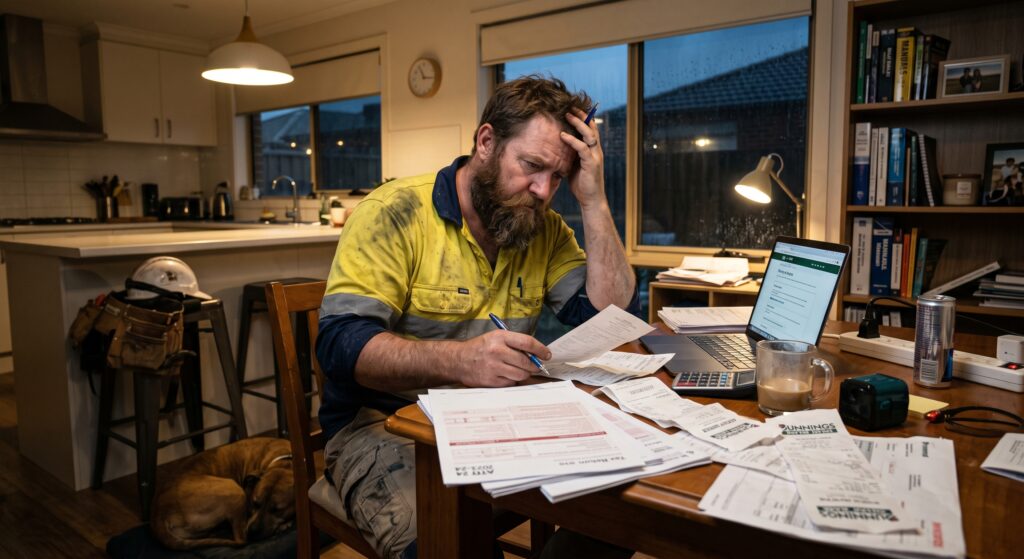
The honest answer is: most tradies are paying more tax than they need to. I’ve been doing accounts for electricians, plumbers, carpenters, and builders for long enough that I can usually tell inside the first appointment. The return goes in, the ATO processes it, the tradie pays whatever comes up, and the whole thing repeats the next year without anyone asking whether it could look different.
That’s not a character flaw. It’s a time problem, mostly, and a knowledge problem. You didn’t go into the trades to become an expert in small business tax. Neither did your last accountant, if their specialty is wages and salaries.
The Tax Return Isn’t the Whole Job
Most people think of an accountant as someone who does the tax return. Submit it, pay whatever’s owed, done for the year. That’s not nothing. But it’s also not most of what you’re paying for, or should be.
A tradie running their own business has questions that show up throughout the year, not just at the end of June. Whether you need to register for GST once you’re approaching the $75,000 turnover threshold where it becomes compulsory. How to structure a van purchase so it’s properly deductible. What to do when a big job falls in one financial year and the costs fall in another. Whether to run as a sole trader or move to a company structure. Whether the PAYG instalments the ATO has estimated for you are based on a number that makes sense for this year.
The tax return is a report of what already happened. The accountant’s job is to make sure what’s happening this year isn’t costing you more than it needs to.
What Tradies Commonly Miss
A few patterns I see repeatedly in tradie tax returns, particularly for people who’ve been doing their own or using a generalist:
Tool and equipment claims are almost always incomplete. Not because tradies aren’t buying tools, but because the record-keeping behind those purchases is inconsistent, and without a system, a lot of it gets missed or can’t be substantiated if the ATO asks.
Vehicle use is another one. The work-related portion of your vehicle costs – fuel, registration, insurance, depreciation – is claimable, but the ATO requires that to be backed by a proper logbook, not a rough percentage. Get the logbook wrong, or skip it altogether, and the ATO can throw out the whole claim rather than just trimming it back, so it’s worth having someone check that yours will hold up. We use our income tax calculator as a starting point with a lot of tradie clients to give them a clear picture of where they stand before we look at what can be improved.
Super is the third area. Most sole traders don’t pay themselves super. That’s their prerogative, but it’s worth knowing that personal super contributions can be tax deductible, which means you can reduce your taxable income and build your retirement balance at the same time. It’s not complicated. It just doesn’t happen automatically.
Structure Matters More Than Most Tradies Realise
Most tradies start as sole traders, which is the right call when you’re getting started. It’s simple, low cost, and there’s no corporate admin sitting on top of you. But as turnover grows, the sole trader structure can start working against you, because your entire business income is taxed at your personal marginal rate, which gets expensive quickly above certain thresholds.
Moving to a company or trust structure isn’t the right answer for everyone, and it’s not always the right answer at the same point in the business’s life. That’s the kind of question worth working through properly with our accounting and tax team rather than making a call based on what another tradie told you at a job site.
When the Accountant Pays for Itself
I’ve had plenty of tradie clients who came to us after years of managing their own tax, or with an accountant they’d been using since they started out. The first year is usually the most revealing, because there’s almost always something that’s been missed or structured in a way that’s costing them.
The number varies, obviously. For some it’s a few hundred dollars in deductions that weren’t being claimed. For others it’s a structure change that saves them several thousand a year. Good bookkeeping matters here too, because you can only claim what you can show. A business running clean records throughout the year is in a completely different position at tax time than one reconstructing twelve months from memory.
What to Look for in a Tradie Accountant
Ask them what they’ve done for other tradie clients. Not in general terms. Specifically. Ask what structure those clients are in, what they tend to miss on their returns, and what a good outcome from the first year working together looks like.
If the answer is vague, that’s useful information.
The other thing worth knowing: an accountant who does your tax return, your BAS, and has access to your bookkeeping is going to see patterns across the year that an accountant who only sees you in July cannot. That breadth of visibility is part of what we do at 123 Financial Group, and it’s why I’d rather have clients whose full financial picture I can see than clients who show up once a year with a folder.
This article contains general information only and is not personal tax advice. Deductibility, structure, and eligibility depend on your specific circumstances. Please speak with our team or a registered tax professional before making decisions based on this information.
If you’re a tradie or small business owner who wants to know whether your current setup is working for you, book a time here and we’ll go through it. You can also try our sole trader tax calculator to get a rough picture before your appointment.